At YAKMA, martial arts is about more than learning techniques, earning belts or passing gradings. It’s about developing confidence, believing in ourselves and learning to adopt an “I can” attitude.
When we first try something new, it can seem difficult, unfamiliar or even impossible. We might think “I can’t do that” or “I’m not good enough”. But with practice, patience, determination and a willingness to try, we often discover that we can do far more than we initially believed.
Every mistake is an opportunity to learn. Every challenge is an opportunity to improve. Every small achievement helps build confidence and reminds us that progress comes from trying, not from being perfect.
We encourage our students to challenge themselves, support one another and never be afraid to try. It’s not about being the best or comparing ourselves with others; it’s about becoming better than we were yesterday.
The confidence and positive attitude developed through martial arts can extend far beyond the training mat, helping us face challenges at school, at work and in everyday life.
Instead of saying “I can’t”, learn to say “I can’t yet, but I’ll keep trying”.
That’s what martial arts is all about — believing in yourself, enjoying the journey, having fun and discovering what you’re capable of.
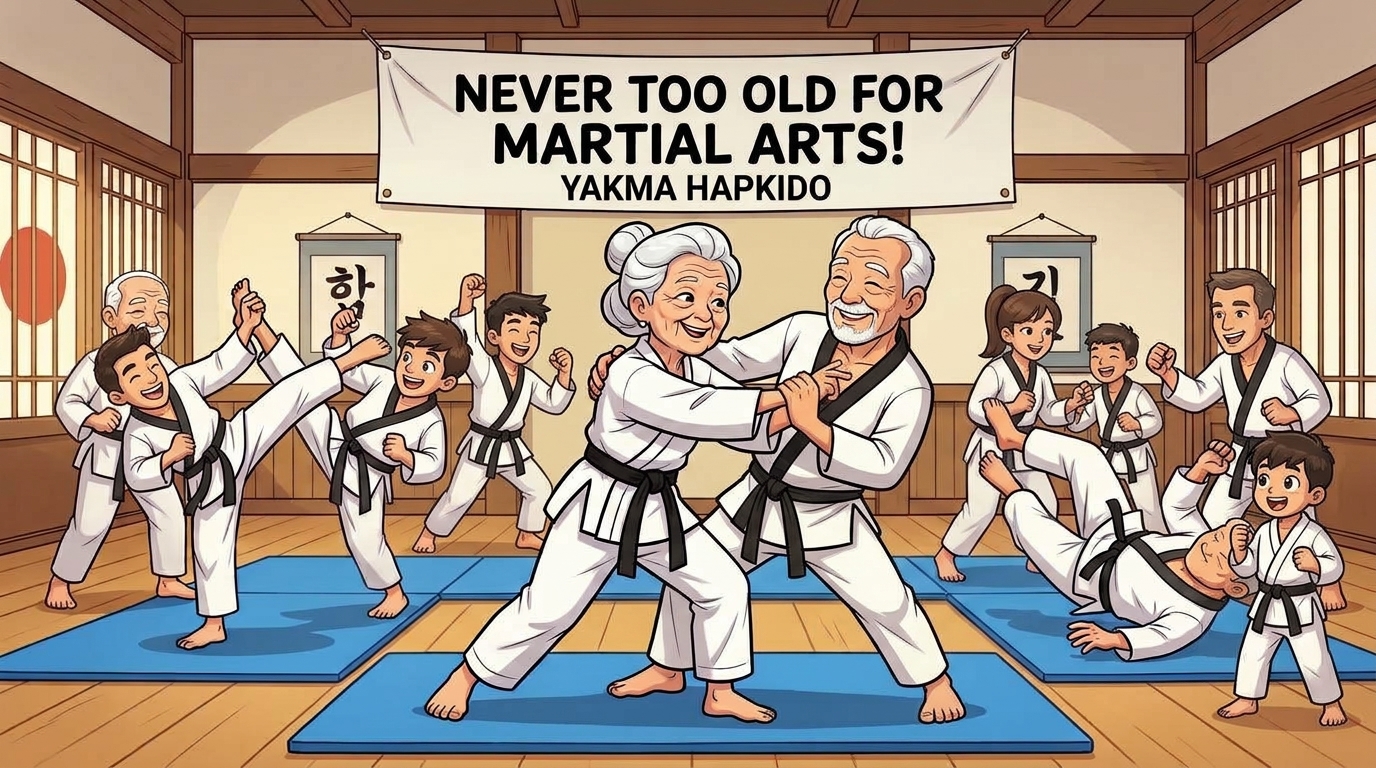
Too Old to Start Martial Arts? Why the Best Time to Begin is Now
Have you ever caught yourself thinking, “I wish I’d taken up martial arts when I was younger,” or “It’s too late for me to start now”?
You are not alone. In my classes, I sometimes hear students in their early twenties say they wish they had started earlier. To me, twenty is still very young—but I understand where that mindset comes from.
It’s true that if your goal is to become an Olympic-level competitor, starting young gives you a massive head start. Even then, plenty of late starters have beaten the odds to reach the top. More importantly, stepping onto the mat isn’t about turning back the clock. It’s about taking what you have today and making it better.
Time will pass whether you train or not. Five years from now, you could either be enjoying the strength, focus, and confidence that come with consistent practice—or you could still be wishing you had started today.
The Hidden Advantages of Starting Later
Yes, training feels different as we get older. Recovery takes a little longer, you might feel sore after a hard session, and you probably aren’t as fast or explosive as you once were.
However, age brings massive advantages to the mat that younger students often lack:
Better Focus: A longer attention span helps you absorb complex techniques faster.
Greater Patience: You are less likely to rush through drills just to look flashy.
Technical Mastery: Martial arts isn’t just about jumping spin kicks and tournaments. With your patience and attention to detail, you can easily become the class expert on the finer mechanics of a technique.
Look around a typical martial arts school. Unless you are at a dedicated Olympic training centre, almost nobody there is going to become a world champion. The real value of training is becoming a stronger, sharper version of yourself. It is about checking your ego at the door. When you “lose” a sparring round, you haven’t failed—you’ve just been handed a free lesson on what to adjust next time.
People with one arm, one leg, or in wheelchairs train in martial arts every day. Compared to the hurdles they overcome, a few age-related aches and pains are nothing. When you truly want to do something, you find a way; when you don’t, you find an excuse.
Overcoming the Physical Roadblocks
“I’m not fit enough to keep up.” If you haven’t exercised in a long time, you simply need to ease yourself in. Start by checking in with your doctor to get the all-clear. Once you’re ready, speak to the instructor before class. Any good coach will happily scale the warm-ups and drills to your current fitness level. Leave your pride at the door, pace yourself, and give your body time to adapt.
“I’m not flexible anymore.” Flexibility varies wildly from person to person. I’ve met complete beginners who can do the splits effortlessly, and black belts who still struggle to touch their toes. Don’t worry about where you are starting from—focus on the direction you are moving in. Slow progress is still progress.
Overcoming the Mental Roadblocks
“I might make a fool of myself.” Every single person in that room—from the white belts to the head instructor—has tripped over their own feet, forgotten a combo, or struggled through a warm-up. Nobody is judging you; they are all too busy focusing on their own training. I once watched an older beginner step to the side to catch his breath during a tough warm-up, then jump straight back in as soon as he was ready. I have infinitely more respect for someone who pushes their limits like that than someone who stays on the couch out of fear.
“I’m not calling someone half my age ‘Sir’ or ‘Coach’.” This is pure ego talking. If you are a successful executive or a respected leader at work, it can be jarring to walk into a dojang or gym and start at the very bottom. Your job title doesn’t carry any weight on the mat—everyone earns respect the exact same way.
Instead of seeing this as a negative, look at how liberating it is. In your daily life, you carry heavy responsibilities and have a reputation to uphold. On the mat, you have a clean slate. Nobody expects you to know anything. All you have to do is listen, learn, and enjoy yourself.
“I won’t fit in.” The vast majority of martial artists are welcoming, supportive, and eager to help newcomers. You won’t just fit in—you will likely build lifelong friendships and a great sense of camaraderie with your training partners.
Still Not Convinced? Look at the Proof
I once met a fantastic 62-year-old Judoka. When his friends asked why he didn’t retire from the sport, he smiled and said, “Because I might start to get old.” The last I heard, he was 78 and working toward his 8th Dan.
History is full of people proving that age is just a number:
Gladys Burrill ran her very first marathon at age 86, and completed another at 92.
Katsusuke Yanagisawa summited Mount Everest at 71.
Teiichi Igarashi climbed Mount Fuji at 99.
Compare that to a woman I once knew in her eighties who believed every ache could be cured with “a good rest.” She kept everything she needed within arm’s reach of her armchair so she never had to get up. Eventually, even basic movement became exhausting. When a visiting NHS physiotherapist finally gave her a sheet of daily mobility exercises, I took a look at the list—every single movement was just a watered-down version of the warm-ups we do in martial arts class.
Use It or Lose It
A geriatric specialist once noted that the vast majority of ailments we blame on “getting old” are actually caused by lack of use, not the ageing process itself.
Martial arts directly fights that decline. It builds functional strength, balance, flexibility, and cardiovascular health. Just as importantly, memorising techniques and combinations gives your brain a serious workout, keeping your mind sharp while connecting you with a great community.
Physically and mentally, martial arts isn’t just something you can do when you’re older—it’s one of the best investments you can make to stay young.